The Tetradrachm of Lysimachos
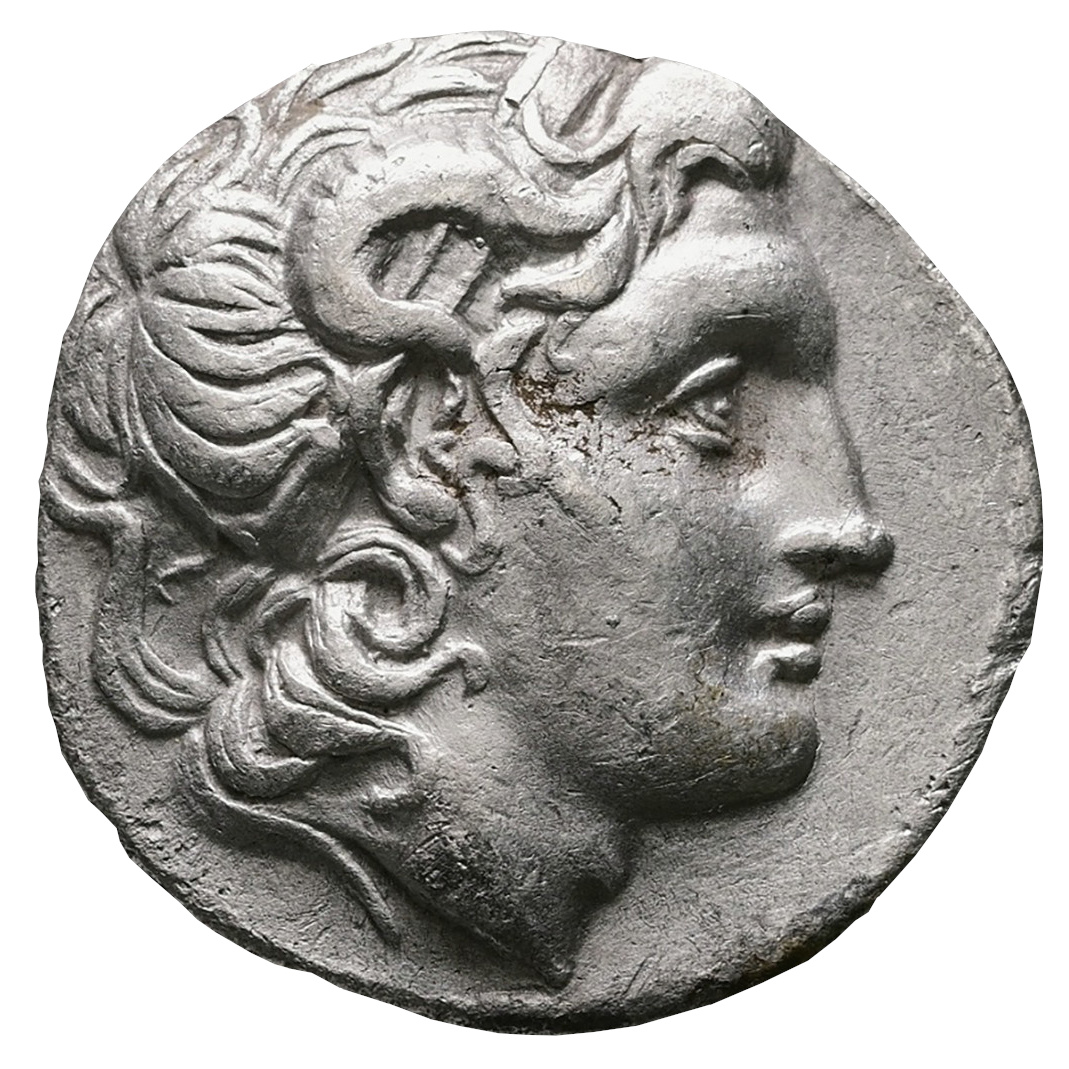
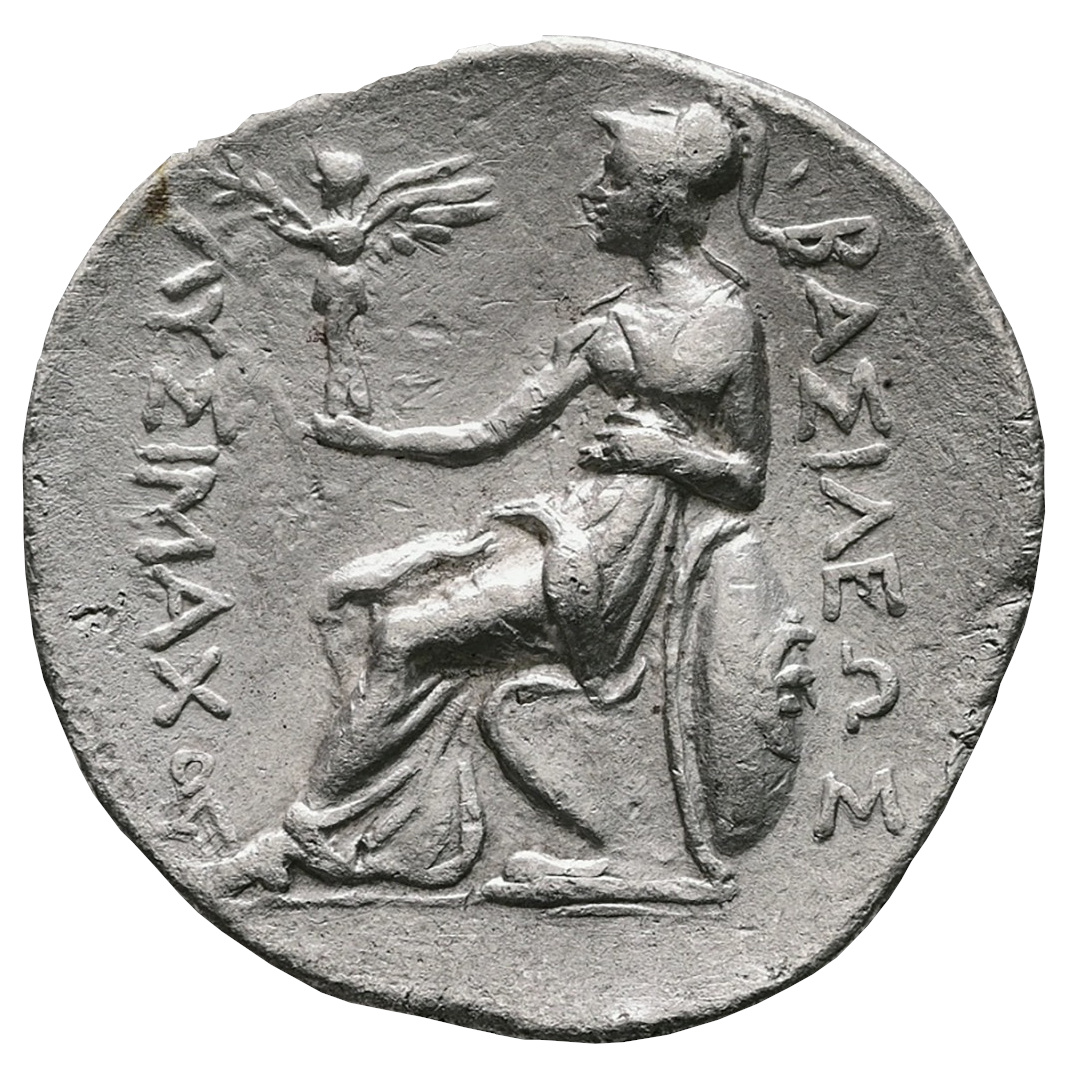
Lysimachos (c. 360-281 BC) was one of the Diadochi and had previously served as a bodyguard of Alexander the Great. After the Battle of Ipsus, where the territories of Antigonus Monophthalmus were divided, Lysimachos received a large part of Asia Minor.
Although he became king in 306 BC, he did not replace Alexander's name on his coins with his own until approximately 299 or 298 BC. Around 297 or 296 BC, he introduced a new tetradrachm type. The obverse showed the idealised head of Alexander wearing the horn of Ammon, while the reverse depicted Athena Nikephoros-Athena, the bearer of victory-seated.1
The type presented Lysimachos as the legitimate successor of Alexander and suggested a glorious future for his kingdom. It proved so successful that, almost two thousand years later, the seated Athena was used as the model for the allegorical figure of Britannia.
At least 400-450 obverse dies were engraved for Lysimachos' lifetime tetradrachms, issued between approximately 297 and 281 BC.1 This indicates a very large volume of production, with a considerably higher annual output than the coinage of Philip II during his reign. An example of his coinage can be found here: Philip II tetradrachm from Amphipolis.
The tetradrachm soon became popular around the shores of the Black Sea. Many local dynasts and rulers copied the type, and it continued to be produced for almost two centuries after Lysimachos’ death.
References
- Metcalf, William E., ed. The Oxford Handbook of Greek and Roman Coinage. Oxford University Press, 2012. ↩
Created August 16, 2026 · Updated August 20, 2026
View related coin