Philip II and the Tetradrachm That Inspired Celtic Imitations
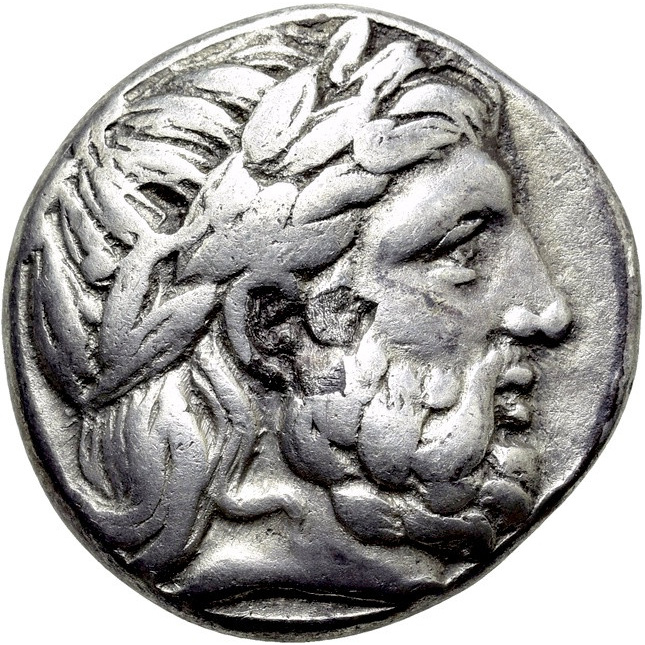
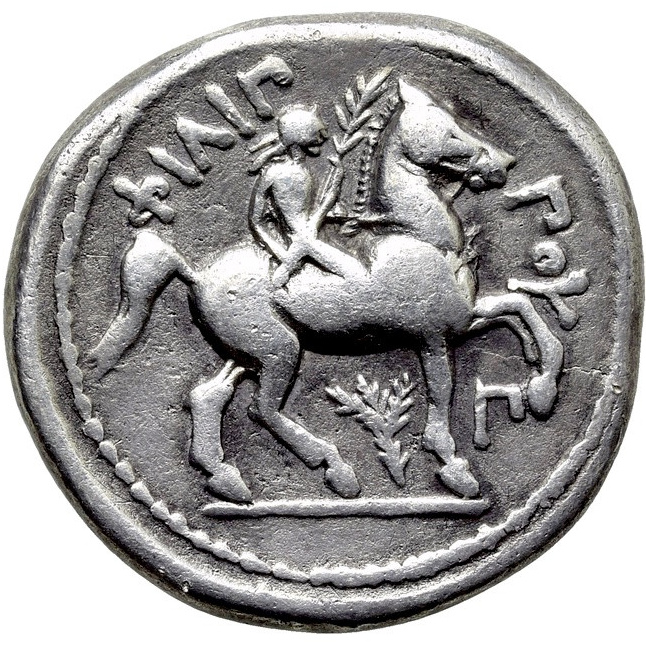
After gaining control of the rich Pangaean silver mines, Philip II of Macedon was able to issue coinage on an unprecedented scale. During his reign (359–336 BC), silver tetradrachms and gold coins provided an important source of wealth that helped him recruit mercenaries, finance military campaigns, and extend Macedonian influence throughout Greece.
The tetradrachm became one of the most successful Macedonian coin types. The obverse depicts the laureate head of Zeus facing right, symbolizing divine authority. On the reverse, the inscription ΦΙΛΙΠΠΟΥ identifies the king, while a youthful horseman rides to the right holding a palm branch, an emblem of victory. Additional control marks, including a branch beneath the horse and the letter Π beneath its raised foreleg, probably identified the mint or the officials responsible for production.
The scale of Philip’s silver coinage was remarkable. Around 544 obverse dies have been attributed to the period from approximately 356 to 328 BC 1, suggesting a rate of production far exceeding that of earlier Macedonian kings.
The tetradrachm’s influence did not end at the borders of Macedonia. Philip II’s coinage became widely imitated by Celtic communities, particularly along the Danube. Celtic imitations retained the characteristic combination of Zeus and the mounted horseman, while gradually transforming the original Greek designs into distinctive local styles.
Thus, the Philip II tetradrachm was more than a means of payment: it became one of the most influential Greek coin types of the ancient world 2.
References
Created August 18, 2026 · Updated August 19, 2026
View related coin