The Boeotian Shield and Theban Coinage
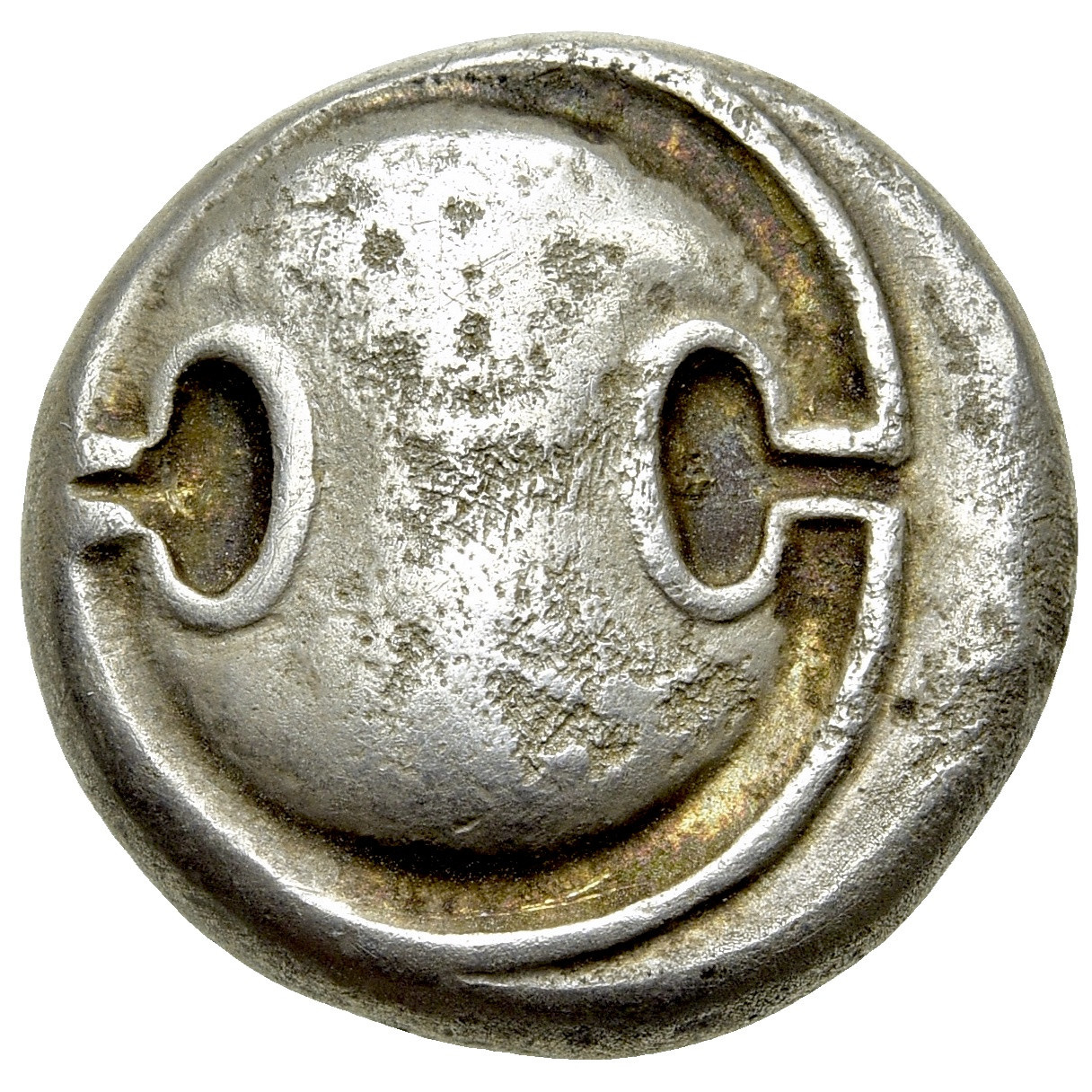
The distinctive Boeotian shield is one of the best-known features of Boeotian coinage. Cities such as Akraiphia, Copai, Coroneia, Mykalessos, and Pharai used this design on the obverse of their coins. Except for Thebes, these cities usually identified their issues with the initials of their ethnic name on the reverse.1
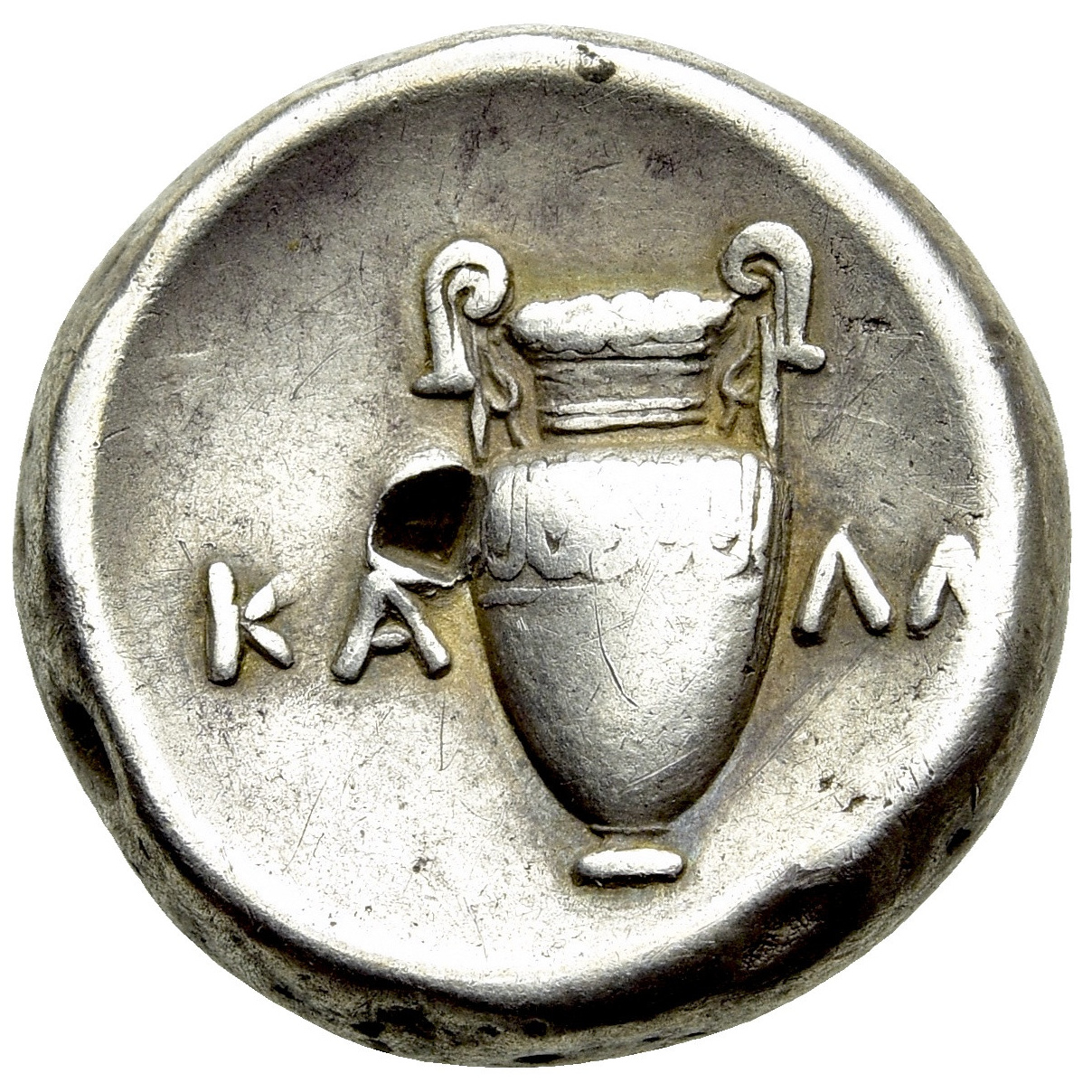
This stater was minted in Thebes, the principal city of Boeotia and a long-standing rival of Athens. During the fifth century BC, the reverse designs of Boeotian coins became increasingly varied. The amphora, a large storage jar, became especially popular at Thebes. It was used as the main reverse type on the extensive coinage issued there between approximately 379 and 338 BC.2 The amphora also appeared on coins minted at Mykalessos.1
The reverse of this coin bears the abbreviation ΚΑΛΛ(Ι), identifying the magistrate responsible for the issue. The coin is classified as group issue D2/3, number 6. According to the magistrate chronology established by Robert Hepworth, it was struck between the terms of the magistrates ΑΓΛΑ and ΤΙΜΟ, the latter being Timolaos.3
The available evidence does not allow the coin to be dated precisely. It was probably issued sometime between 363 BC or possibly 379 BC and 338 BC. The earlier date remains uncertain.
Hepworth also discusses an issue bearing the abbreviation ΞΕΝΟ, associated with the magistrate Xenokrates. He considers this issue a possible forgery. If authentic, it would belong near the end of the series: "if it is not a forgery, belongs to the end of the series".3
References
- Metcalf, William E., ed. The Oxford Handbook of Greek and Roman Coinage. Oxford University Press, 2012, pp. 163–165. ↩
- Sear, David R. An Introductory Guide to Ancient Greek and Roman Coins, Volume I. Spink, 2020, pp. 128–129. ↩
- Gartland, Samuel D., ed. Boiotia in the Fourth Century B.C. University of Pennsylvania Press, 2016, pp. 42–59. ↩
Created April 24, 2026 · Updated August 20, 2026
View related coin