Metapontum: The Barley Ear and Demeter
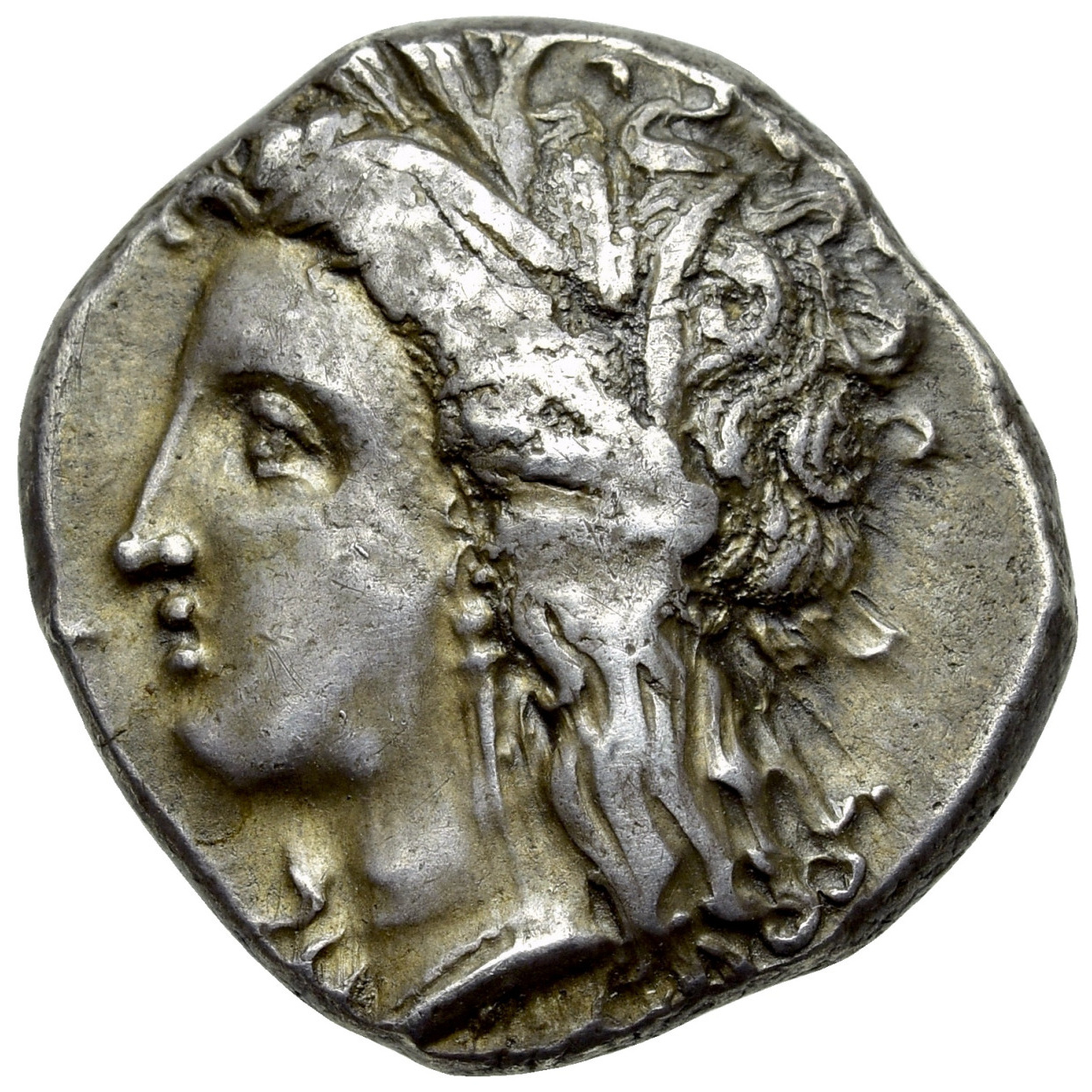
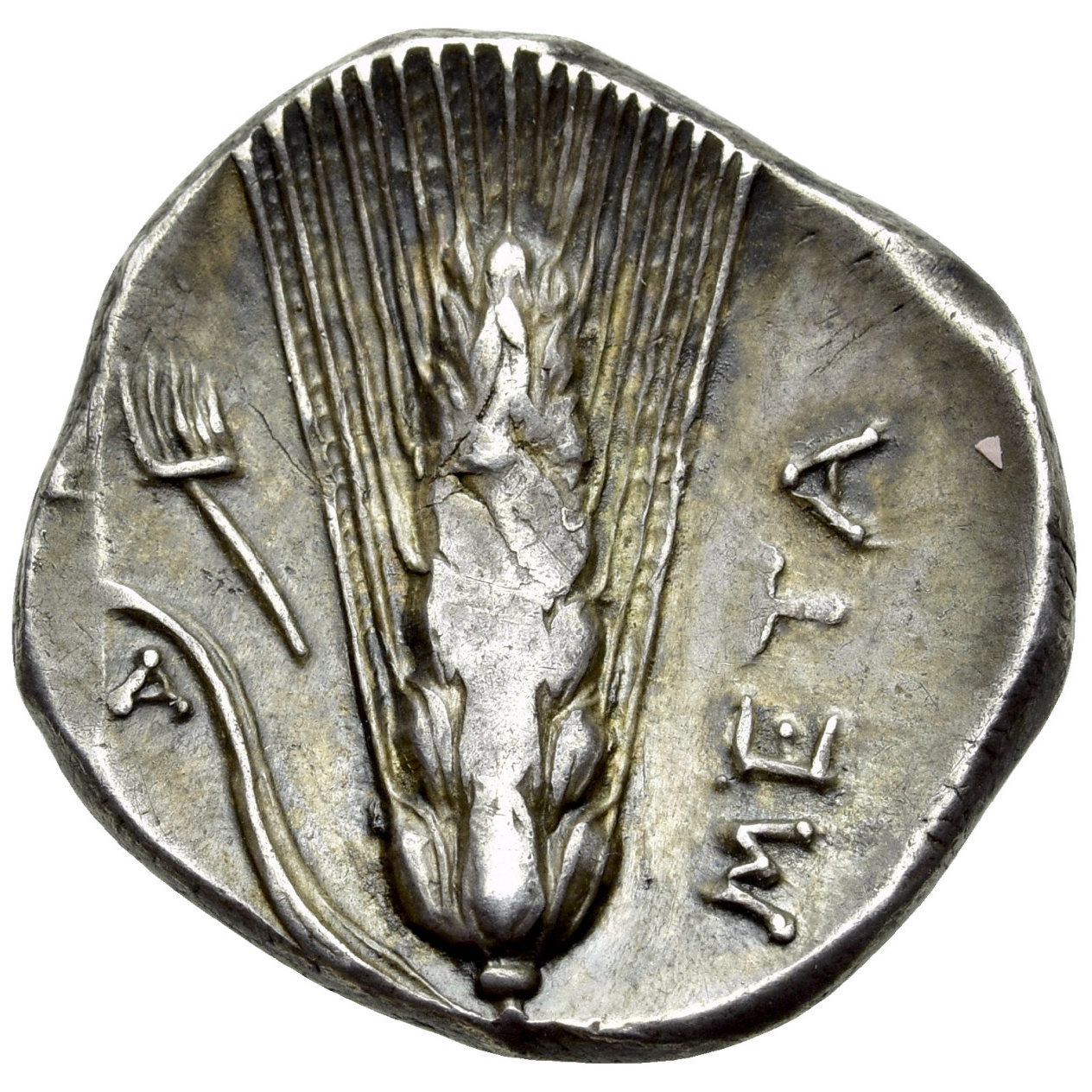
The nomos, or didrachm, from Lucania was minted at Metapontum around 330–290 BC. Metapontum, also known as Metapontium (Ancient Greek: Μεταπόντιον, romanized: Metapontion), was an important polis of Magna Graecia, situated on the Gulf of Tarentum, between the rivers Bradanus and Casuentus (modern Basento). Metapontum appears less often in literary sources than its influential neighbour Tarentum, even in the second half of the fourth century and the first quarter of the third century BC, when the interventions of several condottieri from mainland Greece in South Italian affairs are well documented 1.
At Metapontum, the main design pattern was established in the late fifth century BC: the obverse showed the head of a deity, while the reverse showed an ear of barley. This pattern was maintained during the first half of the fourth century, although the heads and their styles varied considerably. The coinage of the quarter-century after the death of Alexander the Molossian continued this tradition, with a long series of issues featuring the head of Demeter on the obverse, as seen on the coin presented here (HN Italy 1582) 1. The ear of barley became the standard coin type of the polis, and the coins were normally struck on the Achaean standard, with a stater weighing around 8 grams 1. Several of the female heads were given names such as Hygieia (Health), Homonoia (Concord), and Soteria (Safety). These names may connect Demeter with ideas of the physical well-being and protection of the community 2.
The final issues of Metapontum belong to the period of the Second Punic War, when Hannibal came close to ending Roman domination in southern Italy before eventually being defeated by Scipio 3.
References
Created August 20, 2026 · Updated August 20, 2026
View related coin